
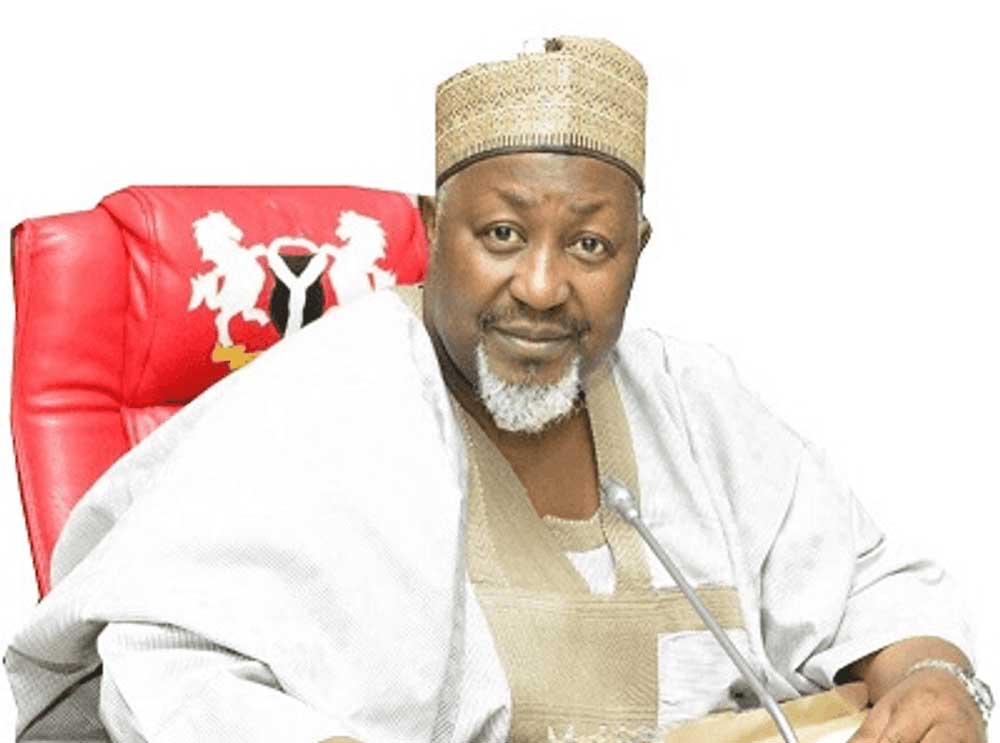
Why ex-defence minister Badaru really resigned
Fresh information has surfaced about why former Defence Minister Badaru Abubakar suddenly stepped down after two years in office. Although Badaru publicly said he resigned for health reasons, insiders say there is far more to the story.
On Monday, President Bola Tinubu accepted Badaru’s resignation and immediately swore in retired Chief of Defence Staff, General Christopher Musa, as the new Defence Minister. Presidential aide Bayo Onanuga announced the exit, attributing it to “poor health.”
But investigations by Saturday PUNCH revealed that Badaru’s resignation was actually triggered by a long-running internal conflict with the Minister of State for Defence, Bello Matawalle. The feud had been quietly simmering for months, out of the public eye.
Badaru, appointed in August 2023 after serving two terms as governor of Jigawa State, was selected because of his administrative experience and influence in the North-West—an area struggling with rising insecurity. Upon assumption of office, he focused on modernising the military and strengthening intelligence and counter-terrorism operations. Matawalle, appointed the same day, was expected to support those efforts.
However, as banditry and terror attacks increased recently—leading to mass abductions of students across several northern states—both ministers came under fierce criticism. President Tinubu even declared a national security emergency. Public frustration mounted, with analysts questioning Badaru’s leadership and calling for a shake-up.
Amid the pressure, Badaru resigned on December 1. Military officials say the “health” explanation was only a cover. According to sources, Badaru and Matawalle had a strained relationship throughout their time in office, despite appearing cordial in public. One ministry official described their dynamic as “frosty,” saying it affected coordination within the ministry.
Another military source noted that Matawalle held stronger political backing, especially from APC leaders who view him as a key political figure in the North-West ahead of the 2027 elections. In contrast, Badaru reportedly lacked such influence, reducing his leverage in internal power struggles.
Following Badaru’s exit, activists and political commentators renewed calls for Matawalle’s removal. The minister has previously faced accusations—including from Zamfara Governor Dauda Lawal and APC groups—of having ties to bandits, allegations he has repeatedly denied. Despite these controversies, presidency sources say Matawalle is likely to remain because the administration sees him as central to its security strategy.
Notably, Matawalle was absent on Friday when General Musa formally took office at the Ministry of Defence, with no official explanation provided.
General Musa’s First Steps
During his first address as minister, Gen. Musa announced plans for a thorough review of all military theatre commands and joint operations nationwide. He emphasised that better coordination among the Army, Navy, Air Force, and other agencies is essential for lasting security progress.
Musa said troop welfare would be a top priority, stressing that allowances, kits, medical care, and family support should be treated as strategic necessities—not administrative afterthoughts. He argued that soldiers cannot perform effectively if they feel neglected.
He outlined three guiding principles for his tenure: operational efficiency, unity among the services, and long-term strategic planning. Musa vowed to enforce discipline, curb corruption, strengthen intelligence and technology use, and collaborate closely with local and international partners.
He also stressed that Nigeria must end the cycle of violence, return children to school, restore farming activities, and pursue both military and non-military solutions such as justice, fairness, and good governance.
Source: punchng